
The Blood Smear Burden: When Quality Takes a Toll on Vet Techs
Dec 05, 2025
The manual blood smear is a cornerstone of veterinary diagnostics. Despite the advent of sophisticated automated hematology analyzers, microscopic evaluation of a properly prepared smear remains "a vital part of a complete blood count (CBC)" for confirming cell counts, assessing cell morphology, and identifying infectious agents (Texas A&M Veterinary Medical Diagnostic Laboratory, 2024; Today's Veterinary Nurse, 2024).
Yet, for the skilled veterinary technician (VT), preparing a high-quality, diagnostic blood smear is often a source of significant on-the-job frustration.
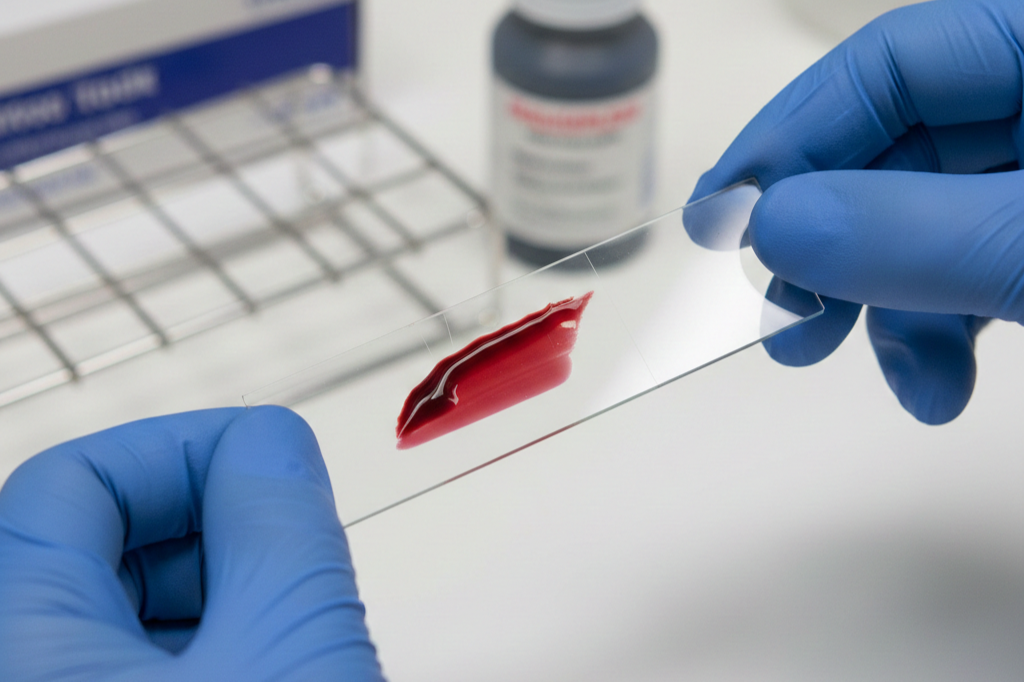
The Time Sink and Downstream Delays
Creating an ideal blood smear with the proper gradient from a thick body to a thin, "feathered edge" and an adequate monolayer—requires precision and practice (Today's Veterinary Nurse, 2024; Clinician's Brief, 2018). It is a delicate balance that must often be achieved under the pressure of a busy clinic schedule.
The literature points to time constraints as a significant barrier to ensuring VT have the adequate time and exposure to hone this critical skill. The downstream microscopy examination is “time-consuming or tedious" as it requires specimen preparation and staining (Today's Veterinary Nurse, 2024). When the smear slides are determined to be inadequate for microscopy examination it triggers a multi-step process to prepare another specimen.
This leads to:
Delayed Patient Care: Re-dos pull technicians away from other essential tasks, delaying the the veterinarian's ability to diagnose and treat their patients. This creates a bottleneck in workflow.
Increased Costs: Multiple attempts consume additional time, slides, and reagents, adding to the practice's operational expenses.
The Impact on Job Satisfaction
The necessity of producing a perfect smear, combined with the time pressure and high stakes of a diagnostic result, can severely impact VT job satisfaction. The literature data, heavily emphasize that high-stress environments are primary drivers of burnout and low professional satisfaction in the veterinary field (AAHA, 2023; CoVet, 2025).
When a VT is blamed or held accountable for an improper smear—a common technical error—it becomes a "source of anxiety" rather than a learning opportunity (Investigating the Effects of Error Management Training, 2021). The constant need for re-preparation due to technical challenge, compounded by the knowledge that this is delaying patient results, can erode confidence and contribute to the feeling that their clinical training is being misused.
As one source notes, the lack of resources, including time and personnel, makes it challenging to allocate the necessary focus to perform this crucial task, placing additional strain on the staff (Today's Veterinary Nurse, 2024). For highly trained veterinary professionals, feeling underutilized or constantly struggling against structural limitations like lack of time is a known path to burnout.
Moving Forward
To improve efficiency and combat frustration, clinics must recognize that achieving high-quality blood smears is a skill that requires dedicated time, the right resources, and a supportive, non-judgmental environment for practice (Today's Veterinary Nurse, 2024).
While there are numerous technologies on the market designed to aid in the blood smear preparation process, access to these technologies may be limited due to cost, availability, limited laboratory space for large equipment, or hesitation in changing current laboratory procedures.
The RapidSmear was designed to alleviate most, if not all, of these issues. It has demonstrated consistent blood smear results with minimal training. This consistency was achieved by designing the RapidSmear to compliment a VT baseline training and muscle memory, rather than introducing drastically new techniques that would require comprehensive retraining. RapidSmear users have reported improvement in their hand stability when making blood smears. They also cited the portability of the RapidSmear allowed them to prepare smears in the field immediately after collecting the specimen.
Learn more about the RapidSmear here.